Pemac Projects Pvt Ltd

India’s Edible Oil Market Growth & Oil Refinery Plants

17

Oct

India’s Edible Oil Market Growth & Oil Refinery Plants

India’s edible oil market is one of the largest in the world. In 2024, the country’s consumption touched nearly 25 million tons of edible oils, making it a key driver of the global cooking oil industry. With a growing population, rising health awareness, and demand for premium oil products, the market is projected to expand significantly in the coming years. This opens vast opportunities for edible oil refinery plants, oil expeller plants, and modern edible oil equipment manufacturers. Rising Consumption of Edible Oils in India India depends heavily on palm oil, crude palm oil, soybean oil, sunflower oil, rice bran oil, and mustard oil to meet its daily cooking requirements. Changing food habits, urbanization, and the preference for packaged food products are pushing demand further. The shift toward healthier oils such as rice bran oil, sunflower oil, and shea butter also highlights the evolving consumer trend. Challenges and Need for Refining Solutions Despite its size, India imports a large portion of its edible oil needs. To reduce dependency, the government and private sector are investing in oil extraction and refining technologies. Modern oil refinery machines are essential to process crude oil into high-quality, safe, and nutritious edible oils. This creates opportunities for advanced oil filtration equipment, solvent extraction plants, and fractionation systems. Role of Pemac Projects in the Edible Oil Industry Pemac Projects is a trusted name in designing and supplying edible oil refinery plants in India, Africa, and across global markets. With decades of expertise, Pemac provides turnkey solutions covering: Degumming / Neutralizing: Removal of gums and free fatty acids.Pemac also offers advanced enzymatic degumming systems, particularly beneficial for rice bran oil, to enhance oil yield and reduce chemical consumption. Bleaching – to improve oil color and quality. Dewaxing/ Winterizing – essential for oils like sunflower and rice bran oil. Deodorizing – for removing odor and enhancing taste. Fractionation – to produce specialty oils such as palm olein and stearin. Whether it’s oil expeller plants for small-scale entrepreneurs or large cooking oil refinery plants for industrial use, Pemac delivers customized solutions with state-of-the-art machinery. Future Outlook The Indian edible oil sector is expected to see robust growth driven by both consumption and processing capacity. For companies looking to invest in oil refinery equipment and edible oil plants, this is the right time to explore opportunities. With its proven track record, Pemac Projects is positioned as a reliable partner for building sustainable and efficient edible oil refinery plants. If you have any queries or need more information about Edible oil refinery plants, solvent extraction plants oroil expeller plants feel free to contact us.

01

Oct

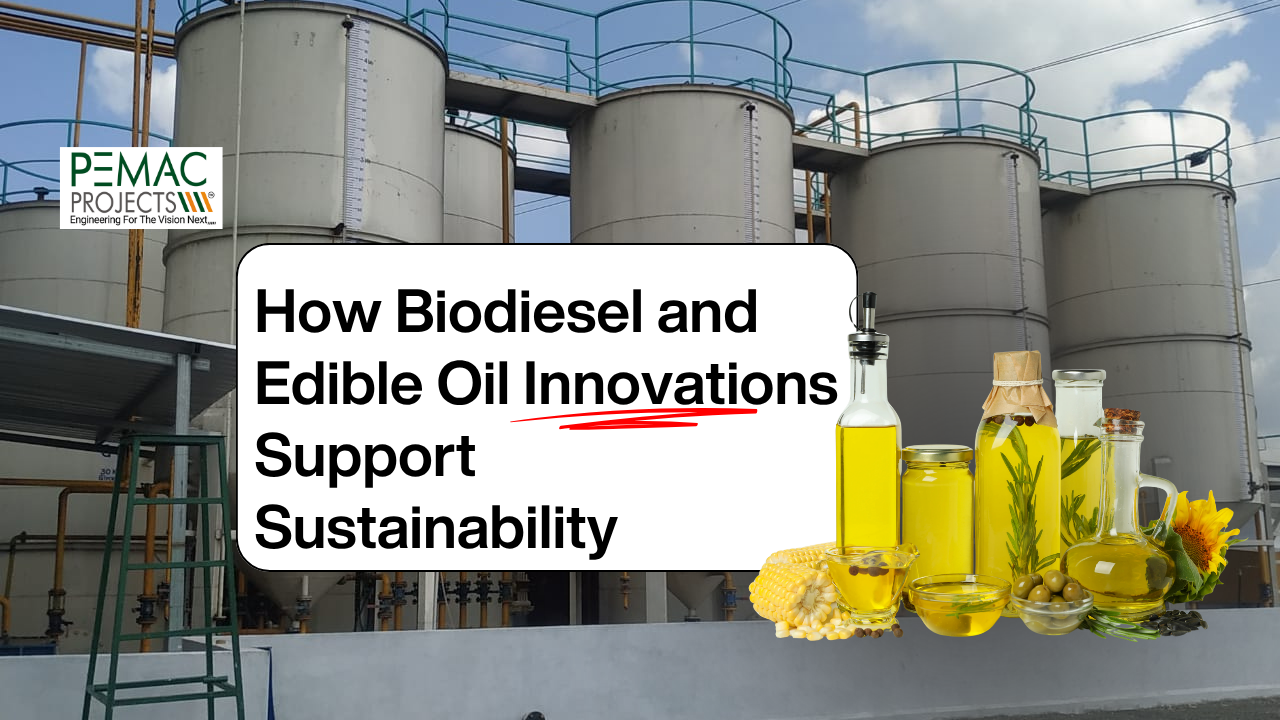
How Biodiesel and Edible Oil Innovations Support Sustainability

The edible oil industry and the biodiesel sector are becoming increasingly interconnected. With global demand for sustainable energy on the rise, edible oil by-products and low-value streams are now key feedstocks for biodiesel plants. Companies like Pemac Projects are leveraging advanced oil refining and biodiesel technologies to create integrated facilities that maximize yield, reduce waste, and contribute to a circular economy. From Edible Oil to Renewable Fuel Traditionally, edible oils such as soybean oil, sunflower oil, rice bran oil, and palm oil have been refined through processes like degumming, neutralizing, bleaching, dewaxing/winterizing, deodorizing, and fractionation to produce high-quality food-grade oils. However, many by-products—like acid oil, soapstock, palm fatty acid distillate (PFAD), and used cooking oil (UCO)—have limited edible applications. Instead of going to waste, these side streams are now valuable feedstocks for biodiesel production, providing both cost savings and environmental benefits. Advanced Feedstock Processing Low-cost feedstocks such as UCO, PFAD, and acid oil often contain high free fatty acids (FFA) and impurities. Advanced pretreatment systems—including acid esterification, dry degumming, vacuum drying, and adsorptive bleaching—are used to lower FFA and moisture levels, making oils suitable for transesterification. Modern biodiesel plants integrate: For oils with highly variable quality, enzymatic transesterification using immobilized lipases offers flexibility. It minimizes soap formation, produces higher-purity biodiesel, and simplifies glycerine recovery, an essential co-product in both biodiesel and oleochemicals. Integration with Edible Oil Refineries An integrated edible oil refinery and biodiesel plant brings multiple benefits: At Pemac Projects, we specialize in designing modular biodiesel plants that align seamlessly with edible oil refinery operations, ensuring maximum return on investment. Environmental & Economic Benefits Future Outlook The edible oil and biodiesel industries are set to merge even further. Next-generation technologies—such as algae-based biodiesel, waste-to-energy integration, and AI-powered process optimization—will play a major role. With government mandates and consumer demand for green fuels increasing, investing in biodiesel plants integrated with edible oil refineries is no longer just an option—it’s a necessity. If you have any queries or need more information about Edible oil refinery plants, solvent extraction plants or oil expeller plants feel free to contact us.

Sunflower oil blog

14

Oct

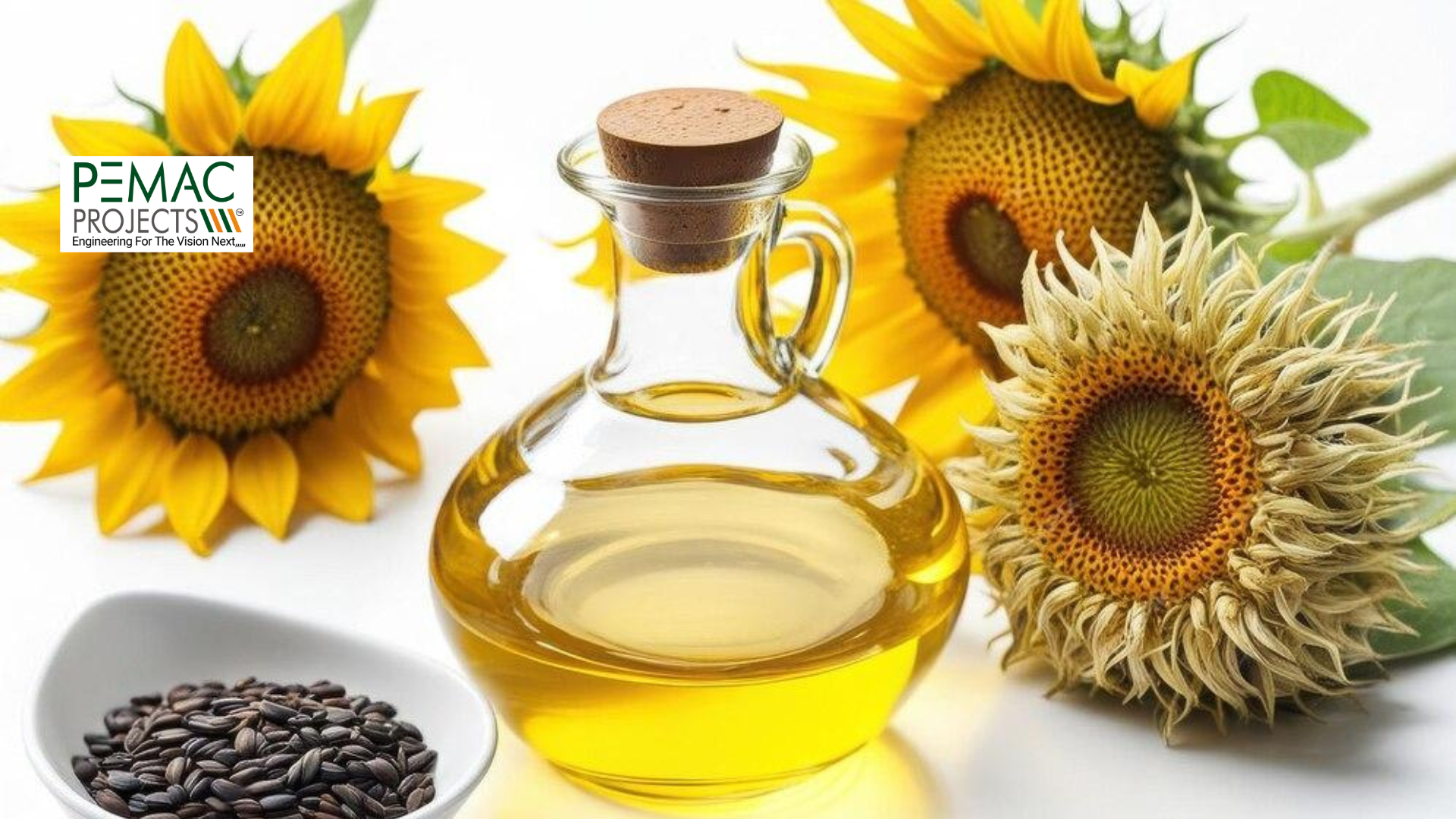
Sunflower Oil Production: From Seed to Bottle

Sunflower is among the most significant oilseed crops in the world. Sunflower seed contains 38% to 50 % oil. MUFAs, or heart-healthy fats, are found in sunflower oil. Both HDL (“good”) cholesterol and inflammation can be lowered with their help. Linoleic Acid in sunflower oil lowers the risk of coronary heart disease. Sunflower oil with a high oleic content holds up better in cooking and could be good for your heart. Sunflower oil is an excellent source of vitamin E, which protects the brain and nerves. Sunflower oil is regarded as the healthiest edible oil because of these and other nutritional qualities. The Manufacturing Process: Cleaning The process begins with cleaning the Sunflower seeds thoroughly to remove stems, pods, weed seeds, and other materials that are present from harvesting. Huller: The machine is use for to crack the Sunflower seed in this way to just break the seed with minimum powder formation. Hull Meat Separation: Using an aspiration system, fine hulls are removed from uncut seed, huge hulls, and flesh in this procedure. Density Separation Meat, husks, and uncut seed may all be separated with this apparatus. In this Machine, Meat is screened through mesh & Large hulls are separated by air aspiration & uncut seed are separated based on density difference. Hulls Purification: In this step, the hulls from the cleaner, huller, Density separator are separated out from fine meat that was carryover with the hulls. Pre-Conditioning: The Meat collected from Density separator are heated to a specific temperature This softens the meat tissues and makes them more elastic. Flaking: The process of flaking is putting the heated seeds between rollers to produce thin flakes. Oil extraction is made easier by the greater surface area of these flakes. Cooking: To further break down the cells and get the ideal oil viscosity and moisture content, the flaking seeds are roasted to a particular temperature. This helps to release oil from the cells. Pressing: Mechanical presses, including screw presses or expellers, are used to press the cooked flakes. Pressure is applied to squeeze out most of the oil. The end product is a solid residue and oil mixture known as “press cake.” Solvent Extraction: The solvent extraction procedure is used to extract the leftover oil: Meal processing and oil extraction are the two steps. Oil extraction: • The press cake is saturated with a solvent (typically hexane). Hexane has a high affinity for oil. • The residual oil is dissolved by the solvent, forming a mixture. • It is now safe for humans to consume the refined sunflower oil with higher grade. Meal processing The solid residue left over after the oil has been extracted is referred to as meal, and it is desolventized in a desolventizer in order to extract any leftover solvent. following its cooling, drying, and storing. This meal is a valuable source of protein that is fed to animals. Refining and processingCrude oil that needs processing to enhance its flavour, colour, and shelf life is known as solvent extracted or expelled oil. Water and organic acids remove gums, Wax, fatty acids, fine meal particles, and lipids. It undergoes refining. The steps involved in Refining are:• Degumming: gets rid of the phospholipids, or gums, in the oil.• Neutralization: Addresses free fatty acids.• Bleaching: Removes color compounds.• Dewaxing : Removal of Wax from the oil.• Deodorization: Eliminates any unpleasant odors.The improved quality refined sunflower oil is now fit for human consumption. If you have any queries or need more information about Edible oil refinery plants, solvent extraction plants or oil expeller plants feel free to contact us.

palm oil refinery plant

26

Aug

The Process for Palm Oil Refinery Plant

Bunch Reception & Threshing: Fresh fruit bunches are separated into loose fruit and bunches after being gathered from the field. Threshing of loose fruit or bunches is done to remove the fruit from the bunches. Sterilization: The fruit is treated with high-temperature wet heat to sterilize it. This step is crucial for the quality of the final oil and for removing the fruit from the stalks. Cooking fruit softens and weakens the pulp structure, which facilitates the detachment of the fibrous material and its contents during the digestive process. The high heat partially disrupts the oil-containing cells in the mesocarp, allowing oil to be released more readily. This step is essential in the palm oil refinery plant. Digestion: The fruit is reheated in a digester to break down the oil-bearing cells and release the palm oil. Digestion is the process of releasing the palm oil in the fruit by breaking down the oil-bearing cells. A cylindrical vessel heated by steam and equipped with several beater (stirring) arms is the typical digester. The shaft rotates centrally. The fruit is mashed by the motion of the revolving beater arms. Pounding, or digesting the fruit at high temperatures, helps to reduce the viscosity of the oil, destroys the fruit’s outer covering (exocarp), and completes the disruption of the oil cells already begun in the sterilization phase. This is a key process in crude palm oil refinery plants. Pressing & Clarification: In this section, the fruit is pressed to extract the palm oil by applying mechanical force to the fruit. The oil extracted from the fruit, along with other impurities, is sent for clarification. Clarification:  The oil, water, and solids in a clarification tank. The water-soluble compounds separate from the oil and move into the water phase, and the oil rises to the top because it’s lighter than water. The oil obtained is crude palm oil, which is further sent for refining. These steps are integral in any palm oil refinery plant. Gum Conditioning and Bleaching Section: The crude palm oil gum conditioning is done with the help of phosphoric acid, followed by the bleaching section. Bleaching earth and activated carbon are used to lighten the oil’s colour. The mixture of oil and earth is then filtered with the help of a Vertical Pressure Leaf filter and finally sent to the deodorizing section. These processes highlight the advanced techniques used by palm oil refinery plant manufacturers. Deodorizing Section: Bleached oil is then passed through the palm oil physical deodorizing section to remove the smell and fats from the oil. This is a crucial step for palm oil refinery plant suppliers to ensure high-quality final products. Dry Fractionation Section: Deodorized palm oil is then passed through the crystallization and filtration process to remove the stearin from the oil. The final oil obtained is called palm olein. If you have any queries or need more information about Edible oil refinery plants, solvent extraction plants or oil expeller plants feel free to contact us.

bottles-sunflower-oil-conveyor-belt-factory-generative-ai_220873-17618

05

Aug

An Extensive Resource on the Edible Oil Refining Process

Edible oil refining is a crucial process in the production of high-quality vegetable oils. The primary goal is to remove impurities and unwanted components to ensure the oil is safe for consumption and possesses desirable sensory attributes. This blog delves into the various stages of the edible oil refining process, elucidating the importance of each step.  1. Degumming The process of Degumming, or taking hydratable phospholipids out of crude oil, is the first step in refining. This is typically achieved by adding water or acid to the oil, which causes the phospholipids to precipitate. The precipitated gums are then separated from the oil, improving its quality and stability. 2. Neutralization The Neutralization process, which comes next, entails eliminating free fatty acids (FFAs) from the oil. This is usually done by adding an alkali, such as sodium hydroxide, which reacts with the FFAs to form soap. The soap is then separated from the oil, resulting in a lower FFA content and improved taste. 3. Bleaching Oil color pigments are removed during the bleaching process.  This is achieved by passing the oil through bleaching earth or activated carbon, which adsorbs the pigments and other impurities. Bleaching not only improves the oil’s appearance but also enhances its flavor and shelf life. 4.Dewaxing:  Dewaxing is a process used to separate oil from waxes, tocopherols, and residual phospholipids. Dewaxing is done to get rid of waxes that could make the finished oil product turbid. Sunflower and rice bran oils require dewaxing. 5. Deodorization Deodorization is a critical step that involves the removal of volatile compounds responsible for undesirable odors and flavors in the oil. This is typically done through a process of steam distillation under high vacuum. Deodorization results in a neutral-tasting oil with a high degree of purity. 6. Winterization/Fractionation Winterization or Fractionation is a process used for oils that contain high melting point triglycerides, such as cottonseed oil and Palm oil. Triglycerides with high melting points separate and crystallize when the oil is cooled to a low temperature. The end product is an oil with better cold stability and increased clarity. The Importance of Edible Oil Refining Refining edible oils is essential to produce high-quality oils that meet consumer demands and regulatory standards. Unrefined oils may contain impurities, such as phospholipids, free fatty acids, pigments, and volatile compounds, which can affect the taste, odor, appearance, and shelf life of the final product. By refining these oils, manufacturers can ensure a consistent and high-quality product that is safe for consumption and appealing to consumers. Diverse Applications of Refined Oils There are numerous uses for refined oils outside of the food business. For example, refined sunflower oil and soybean oil are commonly used in cooking and frying due to their high smoke points and neutral flavors. Shea Butter is widely used in the cosmetics sector because of its moisturizing qualities. Hazelnut oil is highly valued for its rich, nutty taste and is frequently used in gourmet cooking and salad dressings. Canola oil is celebrated for its low saturated fat content and heart-healthy properties, making it a staple in many households. Lastly, mustard oil is renowned for its pungent flavor and is widely used in Indian and other Asian cuisines.By understanding and implementing the various stages of the edible oil refining process, manufacturers can produce a diverse range of high-quality oils that cater to different culinary and industrial needs, making sure that customers are satisfied, and following health regulations. If you have any queries or need more information about Edible oil refinery plants, solvent extraction plants or oil expeller plants feel free to contact us.

canola seed

09

Jul

What is Canola? The journey of canola oil

One of the most significant oil seed plants in the world is canola. About 35–40% of canola seed oil is made up of omega-3 and omega-6 fatty acids, as well as vitamins E and K. Due to this and other nutrient properties canola oil is considered as the healthiest edible oil. Also, in comparison to other vegetable oils, it has less saturated fat. Now a days oil from the mustard seed is extracted in two types of plants: > Solvent Extraction plant > Oil Expeller plant The Manufacturing Process: Canola seed Cleaning First, the canola seeds must be properly cleaned to get rid of any stems, pods, weed seeds, and other items left over following harvesting. Canola seed Destoning A destoner is frequently utilized in the processing of canola seeds.  The destoner helps remove impurities such as stones, soil, and other foreign materials from the seeds. This ensures that the seeds are clean and ready for further processing. Canola seed Pre-Conditioning The seeds are heated to a specific temperature This softens the seed tissues and makes them more elastic. Canola seed Flaking Flaking involves pressing the heated seeds between rollers to create thin flakes. These flakes have a larger surface area, which facilitates oil extraction. Canola seed Cooking The flaked seeds are heated to a specific temperature to further rupture the cells and obtains the correct oil viscosity and moisture. This aids in freeing oil from the cells. Canola seed Pressing The cooked flakes are pressed using mechanical presses (such as screw presses or oil expellers). The majority of the oil is squeezed out using pressure.  The result is a mixture of oil and solid residue called “press cake.” Canola seed Solvent Extraction To extract the remaining oil, solvent extraction process is used. It has two step, oil Extraction & meal processing. Canola seed Oil extraction •         A solvent (typically hexane) is saturated into the press cake. Hexane exhibits a strong attraction to oil. •         The solvent dissolves the remaining oil, creating a mixture. •         The oil-solvent mixture is separated, and the solvent is recovered for reuse. Canola seed Meal processing After the oil has been removed, the remaining solids is called meal, The meal is desolventised in Desolventiser – to remove the remaining solvent. After it has been cooled, dried & sent to storage. This meal is a good protein source used in animal feed. Canola Oil Refining and Processing Solvent extracted oil is crude oil & that needs to be processed to improve its flavour, colour, and shelf-life. Lipids, fatty acids, gums, and small food particles are eliminated by water and organic acids. It undergoes refining •         Canola oil Degumming: Removes phospholipids (gums) from the oil. •         Canola oil Neutralization: Addresses free fatty acids. •         Canola oil Bleaching: Removes color compounds. •         Canola oil Deodorization: Eliminates any unpleasant odors. The refined canola oil is now of higher quality and suitable for human consumption. If you have any queries or need more information about Edible oil refinery plants, solvent extraction plants or oil expeller plants feel free to contact us.

Soybean oil seeds

07

May

Sunflower Oil: Is It Really That Bad for You?

Sunflower oil is one of the most commonly used cooking oils worldwide, renowned for its light flavor and versatility. However, there has been ongoing debate about its health implications. With concerns ranging from its fatty acid composition to its processing methods, many wonder: is sunflower oil really that bad for you? Firstly, let’s talk about the composition of sunflower oil. It contains predominantly monounsaturated and polyunsaturated fats, particularly linoleic acid, which is an omega-6 fatty acid. While omega-6 fatty acids are essential for our health, excessive intake, especially in relation to omega-3 fatty acids, may contribute to inflammation and various health issues. However, moderation is key. When consumed in balanced amounts within a healthy diet, the omega-6 content in sunflower oil need not be detrimental. Another concern is the processing methods involved in obtaining sunflower oil. Pemac Projects, a leading manufacturer of solvent extraction plants and edible oil refinery plants in India and abroad, emphasizes the importance of using high-quality extraction techniques. Solvent extraction, one of the methods employed by Pemac Projects, ensures efficient oil extraction while maintaining the oil’s nutritional integrity. Additionally, their edible oil refinery plants ensure that the oil undergoes processes like neutralization, bleaching, and deodorization to remove impurities and preserve its quality. One of the criticisms of sunflower oil is its susceptibility to oxidation due to its high polyunsaturated fat content. When exposed to heat and light during cooking or processing, these oils can form harmful compounds. However, using refined sunflower oil with a high smoke point and avoiding prolonged heating can mitigate this risk. Furthermore, it’s crucial to consider the source of the sunflower oil. Pemac Projects focuses on providing state-of-the-art technology for oil extraction, ensuring that the oil is extracted from high-quality sunflower seeds. Organic and non-GMO options are also available, catering to consumers concerned about potential pesticide residues or genetic modifications. Despite the concerns, sunflower oil can be part of a healthy diet when used in moderation and in conjunction with a balanced intake of other fats. It’s rich in vitamin E, which acts as an antioxidant, and can be a valuable addition to a diverse range of dishes. In conclusion, while there are valid concerns about the health implications of sunflower oil, when sourced and processed properly, it can be a beneficial part of a balanced diet. Pemac Projects’ commitment to quality extraction and oil refining processes ensures that their sunflower oil maintains its nutritional value and purity, offering consumers a healthier option for their cooking needs. If you have any queries or need more information about Edible oil refinery plants, solvent extraction plants or oil expeller plants feel free to contact us.

healthy-soybeans-are-high-protein-vitamins_49059-512-transformed

10

Apr

Soybean Seed Preparation- Pemac Projects

Solvent extraction technology is a chemical extraction method, using selected solvent – hexane to extract crude oil. It is currently recognized as the international advanced and excellent processing technology to recover oil from low oil content seed/cake (such as soybeans, rice bran etc.) But to Extract oil from Seeds by this methods, Preparation of seed is must. Reason for and purpose of Oil seed preparation is, Oilseeds have a cellular structure. They are made of a large number of small cells, each containing oil, protein, carbohydrates etc. The oil is well protected inside the cells. It cannot be removed effectively without transforming the seed’s form and altering its internal composition. For this reason, getting ready is necessary before extracting oil. The objectives of oilseed preparation are:• To allow the oil bodies to flow from inside to outside the cells by weakening or breaking the walls of the oil-containing cells.• To form the substance in a way that allows the solvent to reach the oil quickly.• to form the substance so that the extractor’s bed of prepared material can be penetrated by the solvent. Cleaning:Cleaning is important to reducing wear on the cracking and flaking rolls and in conveyors in general, and for obtaining high-quality products. It is necessary to remove fines, pods, sticks, stones, and other contaminants.A multideck screener/ Seed Cleaner is used for cleaning. The screens that make up the cleaner typically have opening sizes intended to separate three fractions. Destoning:There is no screening used to separate little stones that are the same size as the seed.When they are very numerous, it is wise to use destoners. A gravity table that exploits the difference in density to distinguish heavier stones from lighter seeds could serve as a destoner. A simpler way of separating stones is to use a current of air, which carries seeds but not stones. Cracking:The main goal of cracking is to suitably reduce the particle size to provide even cooking while avoiding an excessive number of particles.Breaking and cracking can be accomplished in Cracker which consist of a roller mill (two pair fluted mill). Also Braked seeds reduce the power required to subsequent processing steps. Dehulling:Dehulling is an unit operation for separating the hull from the kernel, in order to produce high-protein, low-fiber meal. To be considered hi-pro soya meal, Meal must have a protein content of 48% or more, and less than 3.5% fiber. Lo-pro meal, produced by extracting the oil from soybeans without dehulling, has around 44% protein and 7% fiber. Cooking:Within the continuum of seed preparation, cooking is an important step. Seed Cooker is used for Cooking operation. Cooking helps to rupture oil cells and sterilizes the seeds by destroying enzyme activity.During this process, some of the seed’s fluid moves to the surface, moistening the seed and weakening the kernel. It guarantees stability during the Solvent extraction process, lessens the strain on the flaker, and permits flaking with extremely few fines. Flaking:Small cells that contain oil in oil-bearing seeds must be weakened and enlarged in order to maximise the efficiency of the extraction process. In order to facilitate the easy tearing open of the cell walls for oil extraction, this is accomplished by flaking the seed. Two roll Flacker is used for this operation Expanding:Expanders are used to reform soybean flakes into highly porous collets for improved extraction efficiency in the extractor. Better solvent drainage through the material is made possible by the increased porosity of the substance. Because of its improved oil dissolving properties, less solvent is used and left behind in the solid result, ensuring the lowest possible residual oil levels in the meal overall for each ton of material processed. Cake cooling:Water flashes when the cake leaves the Expander, forming a porous structure inside the collets that is perfect for solvent diffusion. Unfortunately, during the process of moving the delicate hot cake to the solvent extractor, this structure is frequently destroyed, which results in a large amount of fines. As a result, there is a lot of residual oil in the collets and inadequate extraction due to poor percolation. Before being introduced, the collets need to be cooled to a temperature of between 50 and 60 degrees Celsius in a Flake cooler with a moisture content of 9 to 10% to the solvent extractor to ensure optimal extraction. If you have any queries or need more information about Edible oil refinery plants, solvent extraction plants or oil expeller plants feel free to contact us.