Pemac Projects Pvt Ltd

17

Nov

Palm Oil Refining: Processes, Technologies & Plant Solutions

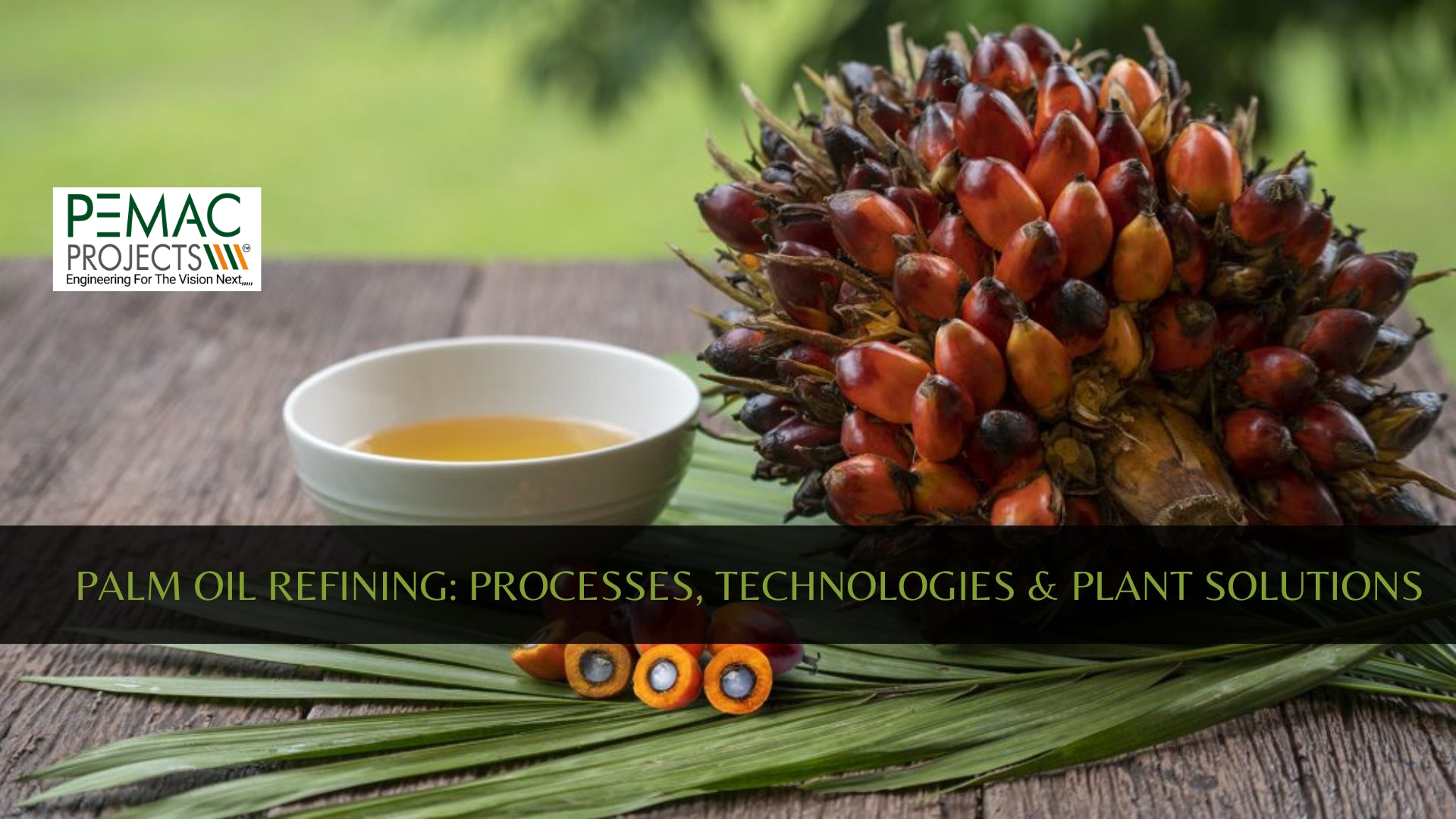
Palm oil is one of the most widely used edible oils in the world, known for its versatility, stability, and high yield. It is an essential raw material in the food, cosmetic, and biofuel industries. However, crude palm oil (CPO) obtained directly from the fruit of the oil palm requires an extensive refining process to make it suitable for human consumption and industrial use. This is where advanced Palm Oil Refinery Plants play a crucial role. A Palm Oil Refinery Plant removes impurities such as free fatty acids (FFA), phospholipids, gums, pigments, and odors, transforming crude palm oil into high-quality refined oil. Modern refineries are designed to ensure high efficiency, minimal oil loss, and compliance with international quality standards. As a leading Palm Oil Refinery Plant Manufacturer & Exporter, Pemac Projects Pvt. Ltd. provides state-of-the-art refinery solutions that meet the growing demand for superior palm oil processing technology worldwide. Understanding Palm Oil Refining The refining of palm oil is a multi-step process that involves physical treatments (no chemical neutralization) to achieve the desired quality. The main stages of palm oil refining include: This step removes phospholipids (gums) from crude palm oil. Degumming can be achieved using water or acid. Proper degumming improves stability and prepares the oil for physical refining. 2. Bleaching During bleaching, the oil is treated with natural earth or activated clay to remove pigments, trace metals, and oxidation products. The process improves the color and extends the shelf life of the oil. 3. Deodorizing / Physical Refining Instead of chemical neutralization, physical refining removes free fatty acids (FFA) by high-temperature steam distillation under vacuum.This process: •  Strips FFAs •  Removes odors and volatile compounds •  Purifies the oil without using caustic soda The result is high-quality RBD palm oil with excellent odor, color, and stability. 4. Fractionation Palm oil fractionation separates the oil into solid (stearin) and liquid (olein) components through controlled crystallization and filtration. Palm olein is widely used for frying and cooking, while palm stearin is used in margarines, confectionery fats, and non-food industries. Each of these refining processes is crucial to achieving the desired specifications of refined, bleached, and deodorized (RBD) palm oil that meets international standards. Types of Palm Oil Refinery Plants 1. Batch Type Refinery – Suitable for small-scale operations. 2.  Semi-Continuous Refinery – Medium-scale, efficient & semi-automated. 3.  Continuous Refinery – Large-scale, fully automated, high throughput. Palm Oil Refining Process Flow Updated to remove chemical neutralization and include physical FFA removal: •   Crude Palm Oil (CPO) Storage – Stored in tanks before refining. •   Heating – Removes moisture and prepares for degumming. •   Degumming – Removal of gums by adding water or acid. •   Bleaching – Pigment and impurity removal using bleaching earth. •   Filtration – Removes spent earth and clarifies the oil. •  Deodorization / Physical Refining – High-temperature steam distillation removes FFA, odors, and volatiles. •  Fractionation – Crystallization separates palm olein & stearin. •  Final Filtration & Storage – Oil is filtered, cooled, and stored. This systematic physical refining process ensures pure, stable, consistent-quality RBD palm oil. Benefits of Palm Oil Refining Refining crude palm oil not only improves its appearance and quality but also enhances its shelf life and commercial value. Some key benefits include: Removal of Impurities: Eliminates unwanted components like FFA, gums, and waxes. Improved Shelf Life: Reduces oxidation and rancidity, making oil more stable. Better Color and Odor: Ensures a clear, golden-yellow appearance with a pleasant aroma. Increased Market Value: Refined oil attracts higher prices in the global market. Compliance with Food Standards: Meets quality norms such as FSSAI, ISO, and HACCP. Refined palm oil is widely used in cooking, bakery, confectionery, margarine, soap, and cosmetic manufacturing, making it a valuable product across multiple industries. Applications of Refined Palm Oil Refined palm oil and its fractions have diverse applications: Palm Olein – Used for frying, cooking oils, and snack foods. Palm Stearin – Used in margarine, shortening, and confectionery fats. RBD Palm Oil – Used in food manufacturing, soaps, detergents, and biodiesel. Industrial Applications – Used as a base in oleochemicals, lubricants, and surfactants. The flexibility of refined palm oil in both edible and industrial sectors highlights the importance of advanced refining technology. Technological Advancements in Palm Oil Refining Modern palm oil refinery plants incorporate cutting-edge technologies for improved efficiency, safety, and sustainability. Some key advancements include: Automation & Control Systems – PLC-based systems ensure precise temperature, pressure, and flow control. Energy Recovery Systems – Use of heat exchangers and condensers reduces fuel consumption. Vacuum Deodorization Units – Minimize oxidation and improve oil quality. Dry Fractionation Technology – Allows precise separation without chemical additives. Environment-Friendly Design – Includes effluent treatment systems and low-emission equipment to meet environmental standards. Pemac Projects integrates these technologies to deliver plants that ensure low utility consumption, minimal oil loss, and superior product output. Quality Control and Testing Quality assurance is a vital part of palm oil refining. Continuous monitoring is done at every stage to ensure consistent quality of the final product. Typical tests include: 1. Free Fatty Acid (FFA) Value 2. Peroxide Value (PV) 3. Moisture Content 4. Color and Odor Analysis 5. Smoke Point and Stability Tests By implementing strict quality control measures, refinery plants guarantee oil that meets global export standards. Environmental Considerations The palm oil industry is often scrutinized for its environmental impact. Therefore, modern refinery plants emphasize sustainable and eco-friendly operations. Key sustainability features include: Effluent Treatment Plants (ETP) to treat wastewater before discharge. Waste Heat Recovery Systems to reduce fuel use. Low-Emission Boilers and Furnaces to control air pollution. Solid Waste Management to reuse or recycle bleaching earth and byproducts. Pemac Projects focuses on designing refinery plants that align with green engineering principles, reducing carbon footprint while ensuring efficient production. Global Demand for Palm Oil Refining Plants The demand for palm oil refining plants continues to grow due to the rising consumption of edible oils in developing and developed nations. Asia, Africa, and South America have become major regions for palm oil production and refining. Countries like Indonesia, Malaysia, Nigeria, Ghana, India, and Thailand are investing

palm oil refinery plant

26

Aug

The Process for Palm Oil Refinery Plant

Bunch Reception & Threshing: Fresh fruit bunches are separated into loose fruit and bunches after being gathered from the field. Threshing of loose fruit or bunches is done to remove the fruit from the bunches. Sterilization: The fruit is treated with high-temperature wet heat to sterilize it. This step is crucial for the quality of the final oil and for removing the fruit from the stalks. Cooking fruit softens and weakens the pulp structure, which facilitates the detachment of the fibrous material and its contents during the digestive process. The high heat partially disrupts the oil-containing cells in the mesocarp, allowing oil to be released more readily. This step is essential in the palm oil refinery plant. Digestion: The fruit is reheated in a digester to break down the oil-bearing cells and release the palm oil. Digestion is the process of releasing the palm oil in the fruit by breaking down the oil-bearing cells. A cylindrical vessel heated by steam and equipped with several beater (stirring) arms is the typical digester. The shaft rotates centrally. The fruit is mashed by the motion of the revolving beater arms. Pounding, or digesting the fruit at high temperatures, helps to reduce the viscosity of the oil, destroys the fruit’s outer covering (exocarp), and completes the disruption of the oil cells already begun in the sterilization phase. This is a key process in crude palm oil refinery plants. Pressing & Clarification: In this section, the fruit is pressed to extract the palm oil by applying mechanical force to the fruit. The oil extracted from the fruit, along with other impurities, is sent for clarification. Clarification:  The oil, water, and solids in a clarification tank. The water-soluble compounds separate from the oil and move into the water phase, and the oil rises to the top because it’s lighter than water. The oil obtained is crude palm oil, which is further sent for refining. These steps are integral in any palm oil refinery plant. Gum Conditioning and Bleaching Section: The crude palm oil gum conditioning is done with the help of phosphoric acid, followed by the bleaching section. Bleaching earth and activated carbon are used to lighten the oil’s colour. The mixture of oil and earth is then filtered with the help of a Vertical Pressure Leaf filter and finally sent to the deodorizing section. These processes highlight the advanced techniques used by palm oil refinery plant manufacturers. Deodorizing Section: Bleached oil is then passed through the palm oil physical deodorizing section to remove the smell and fats from the oil. This is a crucial step for palm oil refinery plant suppliers to ensure high-quality final products. Dry Fractionation Section: Deodorized palm oil is then passed through the crystallization and filtration process to remove the stearin from the oil. The final oil obtained is called palm olein. If you have any queries or need more information about Edible oil refinery plants, solvent extraction plants or oil expeller plants feel free to contact us.